
Door to Door Sales Skills Lead to a Remote Appointment Setting Career

Many people might think that door to door sales is an old way of doing things, maybe something from movies. But actually, in 2026, it still matters a lot for building important skills. For job seekers or those looking to change careers, door to door sales can be a great starting point, much like how many Americans gain experience and confidence in early jobs in travel related industries [1]. It teaches you how to talk to people, handle problems, and build trust.
Think about it: when you knock on someone’s door, you learn real sales skills. You have to be quick on your feet, listen well, and explain clearly. These are key skills for any sales job, from being a direct sales agency representative to a direct selling agent, and they are especially useful for roles that focus on the sales process [2].
Here’s the cool part: the skills you get from in-person door to door sales are perfect for today’s appointment setting careers.
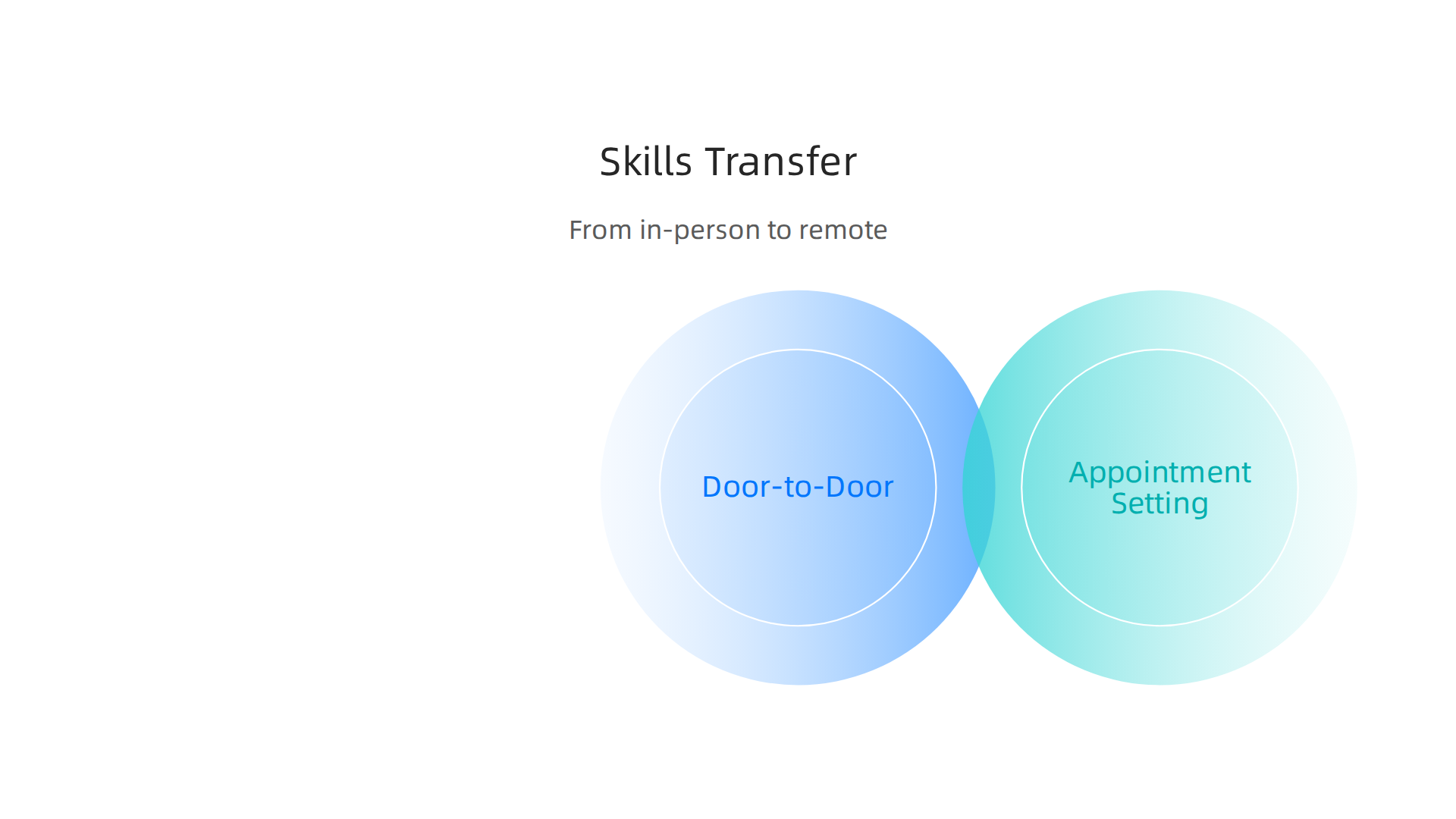
When you can convince someone face-to-face, you’re building strong communication techniques. That experience easily transfers to setting appointments over the phone or even online for remote sales-support roles. You learn how to connect with people, understand what they need, and schedule meetings, which is exactly what a great appointment setter does. The U.S. Department of Labor notes that programs are designed to help you reach your employment goals and boost your career potential [3].
Before you jump into door to door sales, it’s good to know what to expect:
- Income Potential: How much you earn can change a lot. It often depends on how many sales you make, so your hard work directly affects your pay. Some roles offer a base pay plus commission.
- Learning Curve: It’s not always easy at first. You’ll learn a lot about talking to people and dealing with "no." But stick with it, and your skills will grow. Many jobs require training and offer support to help young people succeed in employment programs [4].
- Safety Considerations: Your safety is important. Always work with a known company and be aware of your surroundings. Good companies will give you tips and rules to stay safe.
Starting in door to door sales can open many doors to a rewarding career in sales, including exciting remote opportunities. If you’re interested in learning more about how these skills can lead to a great career, especially in remote roles, you should explore your options.
Launch Your Remote Tradeline Sales Appointment Setter Career
Is Door-to-Door Sales Right for You? Career fit and realistic expectations
Thinking about a job in door-to-door sales? It’s a great way to learn about sales, but it’s not for everyone. Let’s see if it’s a good fit for you in 2026.
Who Does Well in Door-to-Door Sales?
People who succeed in door-to-door sales usually share a few key traits:
- You need to be motivated: You have to want to do well and push yourself. Since your pay often depends on your sales, being self-driven is really important.
- You need to be tough: You’ll hear "no" a lot. It’s like a game where you keep trying until you get a "yes." You need to not let rejection get you down. This skill, called resilience, is key for any sales role.
- You need to be a good talker: You’ll meet many different people. Being friendly, listening well, and explaining things clearly will help you connect with potential customers. This is crucial for direct selling agents or anyone working for a direct sales agency.
What’s a Typical Day Like?
Working in door-to-door sales is a very active job. Here’s what you can expect:
- Hours: You might work evenings and weekends, as that’s when most people are home. The hours can be long, but sometimes they are flexible.
- Physical Demands: You’ll be walking a lot, standing, and carrying your sales materials. It’s a job that keeps you moving!
- Saying "No": Be ready for many people to not be interested. A big part of the job is handling these "no’s" and moving on to the next door with a good attitude.
- Counting Your Steps (and Sales): Companies will often look at how many doors you knock on, how many people you talk to, and how many sales you make. These numbers help show how well you’re doing.
How to Find Good Door-to-Door Sales Jobs
It’s important to find a good company to work for. Here are some sales tips to help you spot good opportunities and avoid bad ones:
- Clear Job Details: Look for job postings that clearly tell you what you’ll be doing, what hours you’ll work, and how you’ll get paid.
- Good Training: Legitimate companies will offer training and support to help you learn the ropes. The U.S. Department of Labor notes that programs are designed to help you reach your employment goals and boost your career potential [1].
- Check Reviews: See what other people say about working for the company. Websites where employees leave reviews can be very helpful.
- Watch for Red Flags: Be careful of jobs that promise huge, easy money with no effort, or ask you to pay money upfront for training or materials. Real opportunities won’t usually do this.
If you like the idea of building strong sales skills and connecting with people, door-to-door sales might be a great starting point for you. These skills can even help you in remote roles like appointment setting. If you want to learn more about how to use these skills in other areas, especially online, check out resources that can help you understand these career paths. For example, you can learn more about how to Unlock High-Paying Remote Jobs with the Best Appointment Setter Courses.
Ready to see how your sales talents can lead to a rewarding remote career?
Launch Your Remote Tradeline Sales Appointment Setter Career
Core skills, training, and tools that make you appointment-ready
So you’ve thought about if door-to-door sales is a good fit. Now, let’s talk about the important skills you’ll learn and the ways you can get ready for this kind of work, and even for other sales jobs like remote appointment setting in 2026.
Essential Skills You’ll Develop
Doing door-to-door sales helps you build many useful skills. Think of them as tools in your sales toolbox.
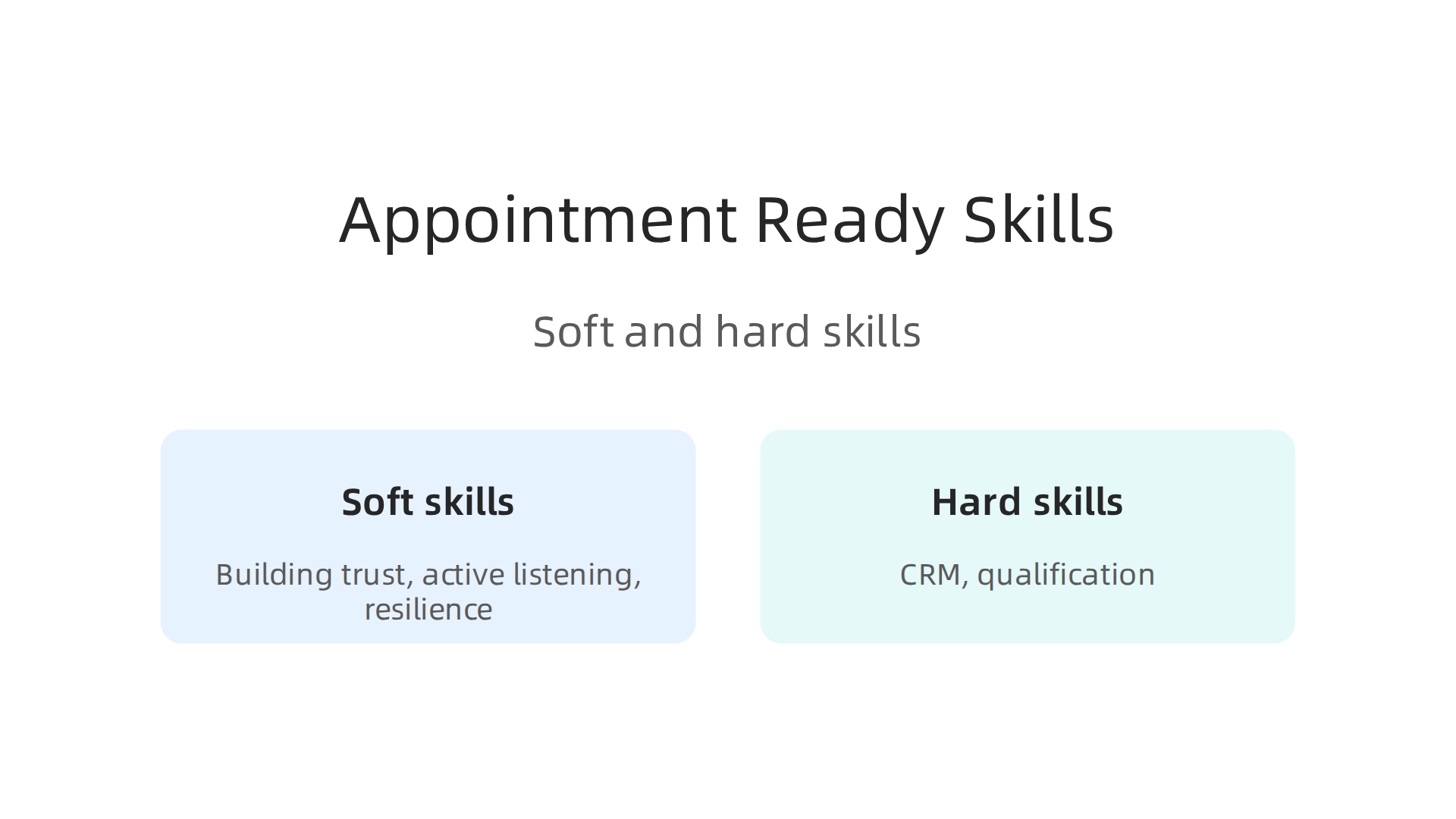
Soft Skills (How you interact with people)
- Building Trust: This is called rapport. It’s about being friendly and making people feel comfortable with you quickly. When someone trusts you, they are more likely to listen to what you have to say.
- Really Listening: This means paying close attention to what a person tells you, not just waiting to speak. When you actively listen, you can understand what they need and offer the right solution.
- Staying Strong: As we talked about, you’ll hear "no" often in door-to-door sales. The ability to keep trying, even after many rejections, is called resilience. It’s super important for any sales role, from direct selling agents to remote setters.
Hard Skills (Things you learn to do)
- Customer Record Keeping: Learning how to keep simple notes about potential customers is key. Many companies use tools called CRM (Customer Relationship Management) systems. Knowing the basics of how to use these helps you remember who you talked to and what they might need.
- Finding Good Fits: This skill is called appointment qualification. It’s about quickly figuring out if a person is truly interested in what you’re selling. This saves you time and helps you focus on people who are more likely to buy.
Training to Get Started
You don’t need to know everything from day one. There are great ways to learn the ropes:
- Company Training: Most good door-to-door sales companies will give you training when you start. They teach you about their products and how to talk to customers.
- Short Courses and Bootcamps: Many places offer quick training programs designed to get you job-ready. For example, places like Bidwell Training Center and Lamson Institute offer career education that can help adults learn new skills and get ready for jobs 1, 2.

The Institute of Technology also has programs where students learn about business and professionalism 3. These programs can help you build transferable skills for many sales positions.
- Learning on Your Own: There are many online resources and guides to help you practice sales tips and communication skills. You can learn a lot by reading articles and watching videos.
Tools and Tech You’ll Use
In door-to-door sales, and in other sales roles too, you’ll use some helpful tools:
- Tablets or Smartphones: These are great for showing product information, taking customer notes, and even processing orders right away.
- Mapping Apps: To help you plan your route and keep track of which houses you’ve visited.
- Simple CRM Systems: As mentioned, these help you keep customer information organized.
Learning these skills and how to use these tools not only makes you better at door-to-door sales but also prepares you for other exciting careers, like becoming a remote appointment setter.
Ready to see how your sales talents can lead to a rewarding remote career?
Launch Your Remote Tradeline Sales Appointment Setter Career
Prospecting, territory planning & daily routines that scale results
Once you have the skills, it’s time to put them into action with smart planning. Think of it like this: you wouldn’t just drive without a map, right? The same goes for door-to-door sales. Good planning helps direct sales agents work smarter and get better results, whether you’re knocking on doors or doing remote appointment setting.
Mapping Your Sales Territory
A big part of being good at door-to-door sales is knowing where to go and when. This is called territory planning.
- Picking Neighborhoods: You’ll want to target areas where people are most likely to need what you’re selling. For example, if you sell home security, you might look for neighborhoods with many new houses. If you’re a direct sales agency, you might have specific zones already chosen for you.
- Time-Blocking Your Day: It’s smart to plan out your time. Decide which hours you’ll spend knocking on doors, which hours for breaks, and which for follow-ups. Sticking to a schedule helps you use your time well.
- Measuring Coverage: Keep track of the houses you’ve visited. Mapping apps can help here. This way, you know where you’ve been and which houses still need a visit. This helps you cover your territory fully and avoid missing opportunities.
High-Impact Prospecting Activities
Prospecting is all about finding new customers. Here are some smart sales tips to make your door-to-door sales efforts count:
- Quick Research Before You Knock: If you have access to information, a quick look can help. Maybe you notice a new car in the driveway or a "for sale" sign. These small details can help you start a conversation.
- Smart Door Sequencing: Don’t just wander! Plan your route down a street. Go to every house in order, or follow a pattern that makes sense. This saves time and energy.
- Scheduling Follow-Ups: Not everyone buys right away. Sometimes, people need more time to think. Always ask if you can come back or call later. Then, make sure you write it down and actually do it. Following up is key for many direct selling agents.
Daily Tracking for Better Results
To truly scale your results, you need to know how you’re doing. This means keeping an eye on your daily numbers, also known as Key Performance Indicators (KPIs). These are like your scoreboard.
Here are some important things to track:
- Contacts Per Hour: How many people did you actually talk to in an hour? This tells you how busy you’re being.
- Qualified Leads: How many of those conversations turned into someone who showed real interest in what you offer? These are your "hot" prospects.
- Appointments Set: How many meetings or next steps did you successfully book? This is a crucial metric, similar to how remote appointment setters track their bookings.
Keeping track of these numbers helps you see what’s working and what’s not. If you want to get better at booking meetings and becoming a more effective salesperson, understanding your numbers is vital. You can learn more about how to make every interaction count by checking out the guide to ditch useless websites and book more meetings.
By planning your territory well, focusing on smart prospecting, and tracking your daily efforts, you’ll see your results grow. These skills are not just for door-to-door sales; they are very helpful if you want to move into other sales roles, like remote appointment setting, in 2026.
Ready to turn your sales talent into a successful remote career?
Launch Your Remote Tradeline Sales Appointment Setter Career
Once you’ve done your homework and planned your route, the real test begins: when someone opens their door. What you say and do in those first moments can make all the difference for successful door to door sales. This is where your sales skills truly shine.
The Power of the First 60 Seconds
Think about it. When you knock, you have just a short window to make a good impression. Many experts agree that mastering your opening 30 to 60 seconds is key to door-to-door sales success in 2026, helping you build trust quickly and avoid common mistakes that might make someone close the door right away [doorknockpro.com].
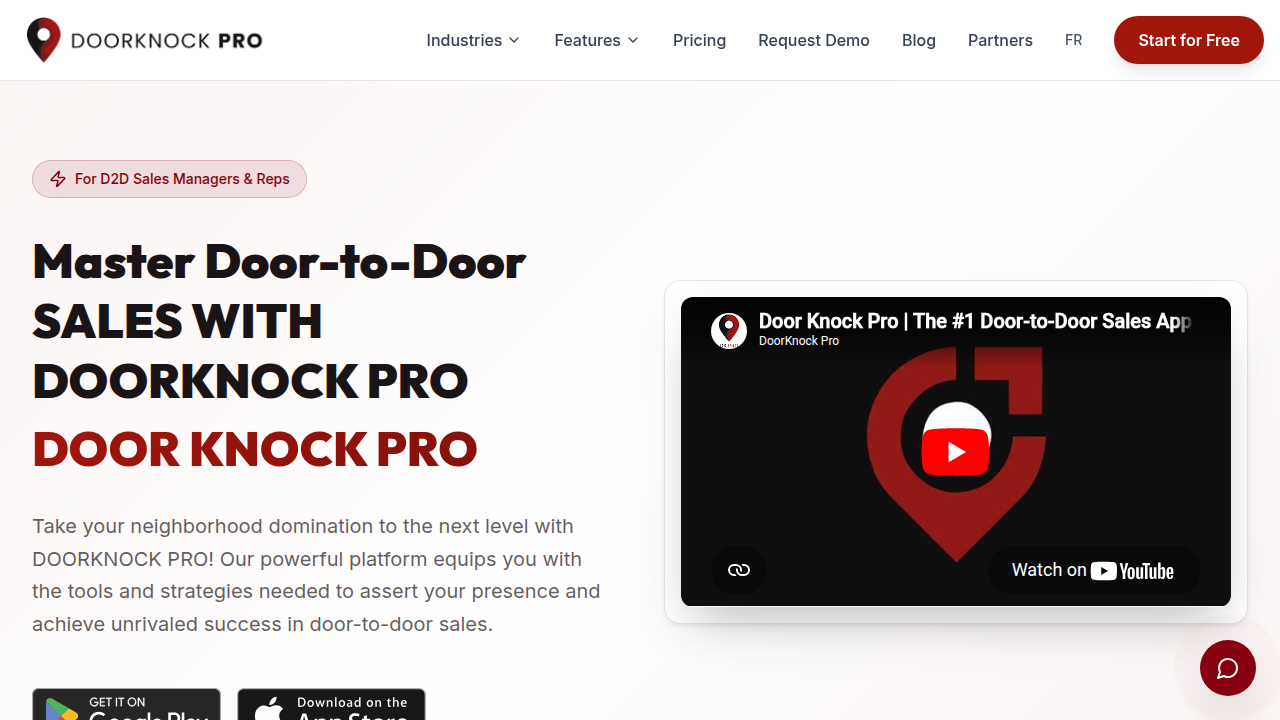
These crucial seconds set the stage for whether you’ll get to share your message or simply be thanked and dismissed.
Your Simple Script for Booking Appointments
A good script isn’t about sounding like a robot. It’s like a helpful map for your conversation. It guides you, especially in those first seconds. Here’s a simple framework for direct selling agents that helps you book more appointments:
- The Hook (Grab Attention): Start with something that makes them curious. For instance, "Hi, I’m [Your Name] with [Your Company]. I’m speaking with your neighbors about a new program that helps them [mention a quick benefit, like ‘save money on their energy bills’ or ‘improve home security’]." Keep it short and friendly.
- Credibility (Why Listen to You): Briefly explain why you’re there. You could say, "We’ve been helping folks in the area get [specific positive outcome] and I wanted to quickly share how it might help you too." Building trust right away is important [thed2dexperts.com].
- Qualification (Are They a Good Fit?): Ask a simple, gentle question to see if they might need your product. For example, "Are you curious about ways to lower your monthly [bill type]?" or "Have you thought about [the problem your product solves] before?" This isn’t a hard sell, just seeing if there’s interest.
- The Ask (Book the Appointment): If they show any interest, go straight for the appointment. "It sounds like this might be helpful. I’m just looking to schedule a quick 15-minute chat to explain everything clearly. Does [mention a specific day and time, like ‘Thursday afternoon’ or ‘early next week’] work better for you?" The goal is always to book that next meeting.
Making Your Script Sound Real
Not every person or home is the same. That’s why your script needs to be flexible, not stiff. While the core parts of your message should stay the same, you can change your words based on who you’re talking to and what you’re selling. If you’re with a direct sales agency selling solar panels, your hook will be about energy savings. If you’re selling home internet, it’s about faster speeds.
To avoid sounding scripted, practice. Imagine different people and situations. You can even personalize your opening slightly by noticing things you saw while prospecting, like a nice garden or a local team flag. This shows you’re paying attention and helps you connect on a human level [prospeo.io]. It’s about being prepared but also being yourself.
Mastering these opening sales tips and scripts can significantly boost your success, whether you’re working door to door or aiming for other sales roles. These skills are very important for booking appointments in any field.
Ready to sharpen your sales skills and aim for a flexible career that lets you book more meetings? You can explore how to master these kinds of interactions and more.
Unlock High-Paying Remote Jobs with the Best Appointment Setter Courses
When you are doing door to door sales, it’s very common to hear "no." People might say they are "not interested," "too busy," or "already have something like that." These are called objections, and learning how to handle them well is a big part of successful sales. Actually, knowing how to answer these quickly can make a huge difference in your door to door sales journey in 2026, helping you get more appointments booked [doorknockpro.com].
How to Answer Common Objections
When someone gives an objection, don’t get discouraged. Think of it as a question or a sign that they need more information. Here’s a simple way direct selling agents can respond:
- Listen Carefully: Let them finish speaking. Don’t cut them off.
- Understand and Agree: Show them you heard them. You might say, "I understand that you’re busy," or "Many people feel that way at first." This builds trust.
- Offer a Solution or Benefit: Gently bring it back to how you can help them. For example, if they say "I’m busy," you could respond, "I completely get that, and I promise to be brief. I’m just quickly sharing how your neighbors are saving money on their energy bills, and I thought you’d want to know too." If they say "I’m not interested," you could say, "That’s perfectly fine, but I just wanted to show you how this program is different from what you might already have." This approach helps you turn a "no" into a conversation [thed2dexperts.com].
When to Book and When to Move On
It’s important to know when someone is truly not a good fit versus when they just need a little more convincing. This is called qualifying. If after a few attempts to answer their concerns, they still show no interest or directly say "no thanks," it’s okay to politely move on. Not everyone will be a customer, and your time is valuable. Focus on those who show even a tiny bit of curiosity. The goal of door to door sales is to qualify prospects for an appointment, not to force a sale on the doorstep.
Smart Ways to Follow Up
Even if you don’t book an appointment right away, you can still leave a good impression. Here are some sales tips for tactical follow-ups:
- Leave Something Behind: A small flyer or your business card with your contact info and a clear benefit.
- Digital Connection: If appropriate and they agree, you might offer to send them a quick email with more details, though be careful not to be pushy.
- Note for Later: If you’re part of a direct sales agency, use your lead management system to make a note about the conversation for future reference.
Handling objections well can improve your sales skills a lot. You can turn many "nos" into opportunities to book appointments and grow your career. If you’re ready to get better at setting appointments and want to explore a flexible career, there are great ways to learn more.
Ready to learn even more powerful sales techniques and master appointment setting? You can explore the best ways to book more meetings.
Unlock High-Paying Remote Jobs with the Best Appointment Setter Courses
You’ve learned how to turn "no" into "maybe" while doing door to door sales. That ability to talk to people, understand what they need, and gently guide them to a solution is super valuable. Actually, many of the skills you use when you’re knocking on doors are exactly what companies look for in remote appointment setters in 2026.
From Door-to-Door to Remote Appointment Setting: Transferable Skills and Transition Plan
Moving from working door to door to a remote appointment setting job is a smart step for many direct selling agents. The skills you’ve built are very helpful in this new role.
What You Already Do That Maps to Remote Work:
Think about your daily tasks in door to door sales.
- Finding Good Leads: When you’re knocking on doors, you quickly figure out which homes are worth your time. This is called "lead qualification." Remote appointment setters do the same thing, but often by phone or computer. They listen carefully to see if a person truly needs the product or service.
- Scheduling Meetings: Your main goal in door to door sales is often to book an appointment for a sales team member. Remote setters do this all day. They manage calendars and set up calls or video meetings.
- Handling Questions and Worries: Just like when you face objections at the door, remote setters have to answer questions and calm any worries people might have. Your sales tips for handling "I’m not interested" are perfect here.
- Keeping Records: If you’re part of a direct sales agency, you likely write down notes about your talks. Remote setters use special computer programs called CRM (Customer Relationship Management) tools to keep track of every conversation.
How to Make the Switch:
Ready to move into remote appointment setting? Here’s a simple plan:
- Show Your Results: When you apply for a new job, don’t just say you did door to door sales. Talk about your achievements. How many appointments did you book each week? How many people did you qualify? These numbers show you can get things done.
- Update Your Resume: Make sure your resume uses words that fit a remote setter job. Instead of just "door to door sales," use phrases like "lead qualification," "appointment setting," "customer engagement," and "strong communication skills." The U.S. Department of Labor provides helpful guides for writing a strong resume [Resume Essentials Participant Guide 2026].
- Practice Interview Answers: Companies will want to hear how you deal with challenges. Think about times you handled a tough customer or convinced someone to book an appointment. You can watch videos about what hiring managers ask in appointment setter interviews to get ready for your own conversations.
Finding Remote Appointment Setter Roles:
It’s easier than ever to find legitimate remote appointment setter jobs in 2026.
- Look Online: Many job websites like Indeed and ZipRecruiter list openings for remote appointment setters. Search for terms like "remote appointment setter" or "entry-level appointment setter no experience" if you’re new to the remote side of things.
- Understand Pay: Most remote setter jobs pay you based on how many appointments you successfully book. This means your hard work directly leads to more income. Some jobs even offer paid training, which is a great benefit [Entry Level Appointment Setter Jobs, Employment | Indeed].
Your experience in door to door sales gives you a great start. With a few adjustments, you can successfully launch a new career in remote appointment setting.
Ready to learn even more powerful sales techniques and master appointment setting? You can explore the best ways to book more meetings. Unlock High-Paying Remote Jobs with the Best Appointment Setter Courses
Moving from door to door sales to remote appointment setting means thinking about a few important things. These include staying safe, following the rules, how you get paid, and where your career can go next.
Safety, Legal Compliance, Compensation Models, and Long-Term Career Growth
When you’re out doing door to door sales, your safety is very important. Always let someone know where you are going. It’s smart to carry a charged phone and avoid working alone in places you don’t know well. If you work for a direct sales agency, your employer should have rules to help keep you safe. They might give you ID badges or special training.
Rules for Selling Door to Door
Before you even knock on a door, you need to know the rules. Many cities and towns in 2026 have laws about door to door sales, often called "canvassing" or "soliciting" [Ravenswood School District Bond Measure Resolution]. You might need to get a permit or a license from the city hall or local government office. These rules can change from one place to another. For example, some places might have quiet hours when you can’t knock on doors. Always check with the local city or county clerk’s office before you start. This makes sure you are following the law and don’t get into trouble. Even local governments, like those in Utah, regularly discuss and pass resolutions that can affect how businesses operate [WEST VALLEY CITY].
How You Get Paid
The way you earn money can be different for door to door sales and remote appointment setting.
- Door to Door Sales: Often, you might get paid straight commission. This means you only get money for each sale you close or each appointment you book. Sometimes, especially if you work for a direct sales agency, you might get a small base pay plus commission.
- Remote Appointment Setting: This often has more choices.
- Hourly + Commission: You get paid for each hour you work, plus extra money for every successful appointment you set.
- Straight Commission: Like door to door, you only get paid for the appointments you book. This model can lead to high earnings if you’re good at sales.
- Salaried: Some remote appointment setter jobs, especially those that are more senior or have extra duties, might pay a set salary. This offers steady pay no matter how many appointments you book that week.
Your income potential often grows as you get better at setting appointments. Learning more powerful sales tips and techniques can really boost your earnings.
Where Your Career Can Go
Both door to door sales and remote appointment setting can be great starting points for a long career in sales.
- From Setter to Sales Pro: After mastering appointment setting, you could move into a full sales role, like an Account Executive, where you close deals yourself.
- Team Leader: If you’re good at leading, you might become a team leader or manager for other setters. You could help teach new direct selling agents how to succeed.
- Specialized Sales: You could choose to focus on a specific type of sales, like business-to-business (B2B) sales, which often offers higher pay.
The skills you learn in either role, like talking to people, handling worries, and keeping good records, are valuable in many jobs. If you’re looking to grow your skills and find out more about what’s possible, exploring specific courses can be a smart next step. You can discover how to unlock high-paying remote jobs with the best appointment setter courses. This kind of training helps you improve your sales and move up in your career.
Summary
This article explains why door-to-door sales still matters in 2026 and how the role builds transferable skills that lead to remote appointment-setting careers. It walks through what a typical day looks like, realistic income models, safety and legal basics, and the personal traits that predict success. You’ll learn the essential soft skills (rapport, listening, resilience) and hard skills (CRM notes, lead qualification), plus practical tools like tablets, mapping apps, and simple CRMs. The piece also outlines territory planning, daily KPIs to track, a compact opening script for booking appointments, and ways to handle common objections. Finally, it shows a clear transition plan from in-person canvassing to legitimate remote setter roles and where to find training and job listings to move up the sales ladder.
Python for Data Science Your Career Path to Get Hired in 2026

Launch Your Remote Tradeline Sales Appointment Setter Career